Giving fashion shoppers the confidence to buy: an AI try-on that grew average basket size 4x.
Client
Sample
year
2022 - 2026
role
Product Design - Brand Identity - UX & UI
Project Description
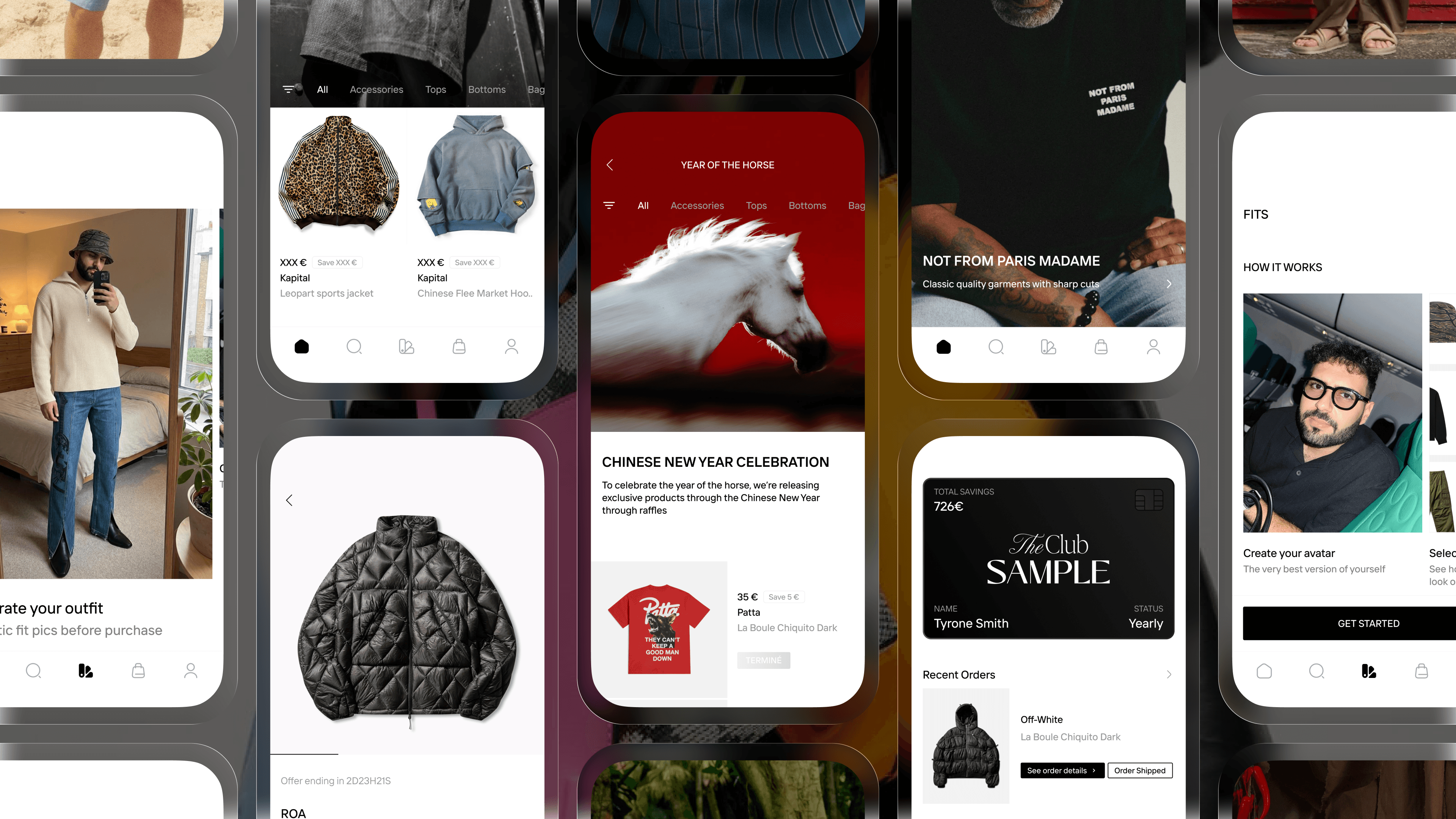
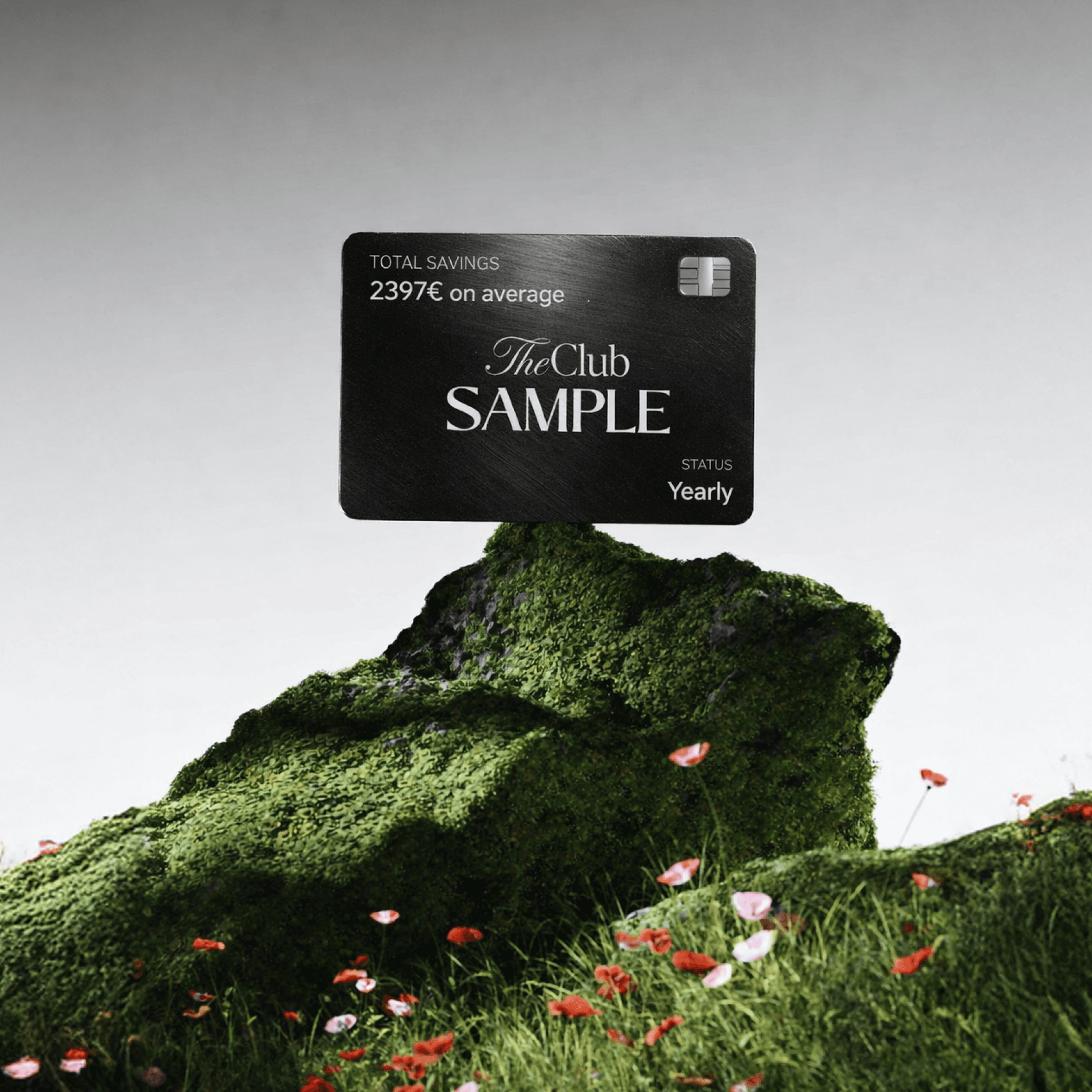
SAMPLE is a members-only private sale app for premium and luxury fashion, which I co-founded and designed from scratch. It has generated €4M+ in revenue, reached 200K+ monthly active users and holds a 4.8 rating across 6,000+ App Store reviews.
Over four years we designed and shipped almost everything a marketplace needs: the member app on iOS and Android, a back office for our brand and retailer partners, a design system built from zero, a rebrand from Sneakmart to SAMPLE, and the brand campaigns around every drop.
This case study focuses on one of the hardest problems we faced. Members found pieces they loved and added them to their basket, then stopped. The data pointed at checkout; the members pointed at confidence. AI-FITS, our virtual try-on, was our answer: it lets members see an outfit on themselves before they commit.
Type
Shipped · live product
Team
4 co-founders · I led product and design
Timeline
Jan 2026 to launch · 2 months
Platform
iOS · Android
Tools
Figma · Mixpanel · Claude · ChatGPT
00 · Overview
Problem
Members discovered and saved pieces, then dropped off between basket and purchase. The gap wasn’t price or information: they couldn’t picture the item on themselves.
What I did
Reframed the problem from checkout friction to purchase confidence. Led product and design for AI-FITS end to end: onboarding, outfit builder, output, cart, and the rules that make the AI feel trustworthy.
Result
Average basket size grew 4x after launch, conversion at the basket rose 43%, and product and brand discovery through the catalogue grew 10x.
4x
Average basket size · vs €106 before launch · over Jan -> Mar 26
+43%
Conversion from basket to purchase · Jan -> Mar 26
10x
Product and brand discovery in the catalogue · Jan -> Mar 26
01 Context
02 Insights
03 Reframe
04 Explorations
05 Structure
06 Solution
07 Impact
08 Reflection
01 · Context
Premium brands have never carried this much stock, or cared more about where it’s sold.
For the business
For the owner
Constraints
Founding team, no dedicated research
iOS and Android
~60 seconds per AI generation
Partner brands’ image standards
Limited stock: drops sell out
02 · Insights
Insight 01
Discovery wasn’t the problem.
Members browsed, saved and added to basket. Product pages were clear. The drop-off happened after the basket, at the most expensive moment in the funnel.
Source · Funnel analytics
Insight 02
Trust in SAMPLE wasn’t either.
Reviews and social proof were working. Members trusted the brands, the drops and the app. More reassurance about us wouldn’t move them.
Source · Interviews · app reviews
Insight 03
Trust in how it would look was.
Members didn’t trust how a piece would look on them. The gap between seeing and committing was emotional, not informational, and it showed up again in fit-related returns.
Source · Interviews · returns data
“I like it, but I can’t really tell if it suits me without trying it.”
SAMPLE member · user interview
03 · The reframe
Principle 01
Confidence over information
Members didn’t need more product data. Every screen had to add certainty, not specs.
Principle 02
Personal over generic
A result that looks like you builds more trust than a recommendation that feels algorithmic.
Principle 03
Commitment over exploration
Every interaction moves toward a decision. The try-on ends on Add to cart, not on another browse.
04 · Explorations
Three directions, judged on one question: does it close the gap between liking and buying?

REJECTED
Size recommendation
Suggest a size from body measurements. It asked for too much input before showing any value, and it solved fit, not the feeling of how a piece looks on you.

REJECTED
Social proof
Show how similar members styled the piece. It added comparison anxiety instead of reducing purchase anxiety: someone else looking good isn’t you looking good.

KEPT
Virtual try-on
AI places the outfit on the member’s own photo. It answers the emotional gap directly, at the exact moment of decision. The design challenge was never making the AI work. It was making the AI feel trustworthy.
05 · Structure
One flow, from first selfie to checkout.

States and edge cases

Three visible stages over ~60 seconds, so the wait reads as work in progress, not a freeze.

The selfie breaks one of the four rules. We say which one and how to fix it before generating.

A size sells out mid-outfit. It’s disabled in place and the rest of the look stays in the cart.

The outfit is kept; one tap retries. A failure never costs the member their selection.
06 · Solution
Onboarding
Before we could ask for a photo, we had to earn it.


1
Three cards explain the value before any ask: your digital twin, realistic photos, fewer returns.
2
Four rules make a good selfie obvious, so the first result is good, not a retry.
3
Height and weight arrive pre-filled; Continue is one tap. “You can change it later” removes the fear of getting it wrong.
Outfit builder
Constraint on the clothes, freedom on the context.


1
Four slots only: accessories, top, bottom, footwear. No blank canvas, no paralysis.
2
Scenes (studio, bedroom, café) make the result feel like a photo of you, not a product shot.
3
Reset and Change model are always visible, so trying again never costs anything.
The outfit
Full screen. One primary action.


1
Add to cart is black, full width, unmissable. Regenerate and Share sit small and equal.
2
The copy hands over the decision: “Like your outfit? Share it or buy it.”
3
Shared images carry a SAMPLE watermark. Every good fit becomes distribution.
The cart
Four pieces, one tap.


Every item in the outfit arrives pre-loaded. Adding the look is one button, not four product pages. Size selection inline. Sold-out sizes are visibly disabled, never hidden. “Last one” in red only when it’s true. Real scarcity, not manufactured urgency. The AI built the confidence. The cart’s job was not to lose it.
06.5 · See it work

From a drop to checkout: pick a piece, build the outfit, see it on yourself in a café, add the whole look to the basket.
System
AI-FITS was built inside the SAMPLE design system I created from zero across iOS, Android and web: the outfit slot, the scene selector, the generation progress and the outfit cart sheet became shared components.

07 · Impact
Confidence turned into bigger baskets.
4x
Average basket size · €106 before → €424 after · Jan - Mar 2026 · Mixpanel
+43%
Conversion from basket to purchase · Jan - Mar 2026
37% → 39%
Return rate · the guardrail that should not get worse

"I love the AI FITS feature, I see myself in the clothes before even receiving it."
App Store review · April 2026
AI-FITS was one decision in four years of decisions
Onboarding redesigned from seven steps to three
Design system from zero across iOS, Android and web
Funnel instrumentation with Mixpanel, and A/B tests
B2B back office for brand and retailer partners
User interviews and usability testing
Full rebrand from Sneakmart to SAMPLE
08 · Reflection
What I would do differently
Test a faster preview first
Sixty seconds is a long wait for an outfit. I designed around the wait instead of testing a quick low-fidelity preview before the full render.
Measure confidence, not only baskets
I tracked basket size but never asked members if they felt more certain. The metric I optimised wasn’t quite the problem I set out to solve.
What it taught me about designing with AI
Trust is built around the output
Members judged the result through its framing: the wait, the words, the scene. The periphery decides whether the AI feels credible.
Design the failure first
The moment the AI gets it wrong is where trust is kept or lost. That moment deserves as much design as the perfect result.
Credits
Paul Nizet · Co-founder, Software Engineer
Martin Seigneuret · Co-founder, CTO
Atabak Khalilinejad · Co-founder, product and design